
Alexander the Great and his time
| série: | Alexandre le Grand |
| éditeur: | Barnes |
| auteur: | Savill Agnes |
| classement: | biblio501 |
| année: | 1993 |
| format: | cartonné avec jaquette |
| état: | TBE |
| valeur: | 10 € |
| critère: | ** |
| remarques: | English book, Alexander the Great and his time preface - Alexander, a genius in battle who loved the arts, who respected every form of religion and who was the first to advocate the brotherhood of all mankind - sources: Arrian, Droysen, Tarn and colonel Dodge - miles traversed from Pella to Alexander's death in Babylon amounted to about 35'000 km 1/ introduction: accession to crossing of the Hellespont - Plato advocated the first democratic government in "the Republic", then he advised monarchy in "the laws", however the king was to be a man of noble character, bound to work for the good of his subjects - Isocrates was the first Greek to inspire unity against Persia - description of Philip II, the Companions, Alexander's youth, Attalus seemed not to have been disloyal - Alexander long regretted the sack of Thebes, Theban mercenaries taken prisoners were always dealt with special terms - short description of Alexander's army, the "Agema" = special guards of Alexander consisting of both cavalry and foot soldiers - description of Alexander's physical appearance >> p. 19 notes about the book on Alexander by colonel Dodge 2/ Asia Minor, Egypt, Gaugameles description of the Persian kings, dynasty of the Achaemenid: - Cyrus the Great 558-529, founder of the Persian empire - Cambyses II 529-522, added Egypt to Persia - Darius I 521-485, reached the Indus but was defeated at Marathon - Xerxes I 485-465, was defeated at Salamis - Artaxerces I 465-424, revolt in Egypt - Xerxes II 424, murdered by Sogdianus - Darius II 423-405, rebelled against Sogdianus, the Persian empire starts to degenerate - Artaxerxes II 404-358, Greek authors gave him the epithet "Mnemon" (having a good memory) - Artaxerxes III 358-338, his reign coincided with the reign of Philip II - Artaxerxes IV 338-336, inthroned by Bagoas - Darius III 336-330, forced Bagoas to commit suicide but lacked authority and military experience - Artaxerxes V (Bessus) 330-329 >> p. 24 the improvement of the monetary system by Alexander (but not explained) - battle of Granicus, may 333 BC >> p. 31 knot of Gordium (cut but not untied) - battle of Issus november 333 BC, behaviour of Alexander with Darius's wife Sateira considered as the noblest of all conquerors - siege of Tyr, january to august 332 BC - Egypt, winter 332/331 BC, prophecy about Alexander, "battle of mice" against Sparta by Antipater (Alexander dixit) - battle of Gaugameles, october 331 BC 3/ Babylon to Hindu-Kush, oct. 331 to nov. 330 BC - Babylon, Mazaeus becomes viceroy of Babylon = cradle of humanity and city of the oldest civilization: the Chaldeans (7000 BC) - the fire as set by Alexander in Persepolis is disputed by Savill - death of Darius III, an ideal monarch in time of peace but incompetent (battle-shy) in troubled times 4/ Hindu-Kush to Sogdiana, 330-328 BC - the Himalaya ( = snow-abode in the Sanscrit), language = house of snow, covered with snow - later on, Hannibal, in crossing the Alps, should have been inspired by Alexander crossing the Himalaya - march to Alexandria-the-Furthest (Eschate) which was the ultimate northern limit of Alexander's empire - first "small" defeat on the river Polytimetus, finally the Sogdian revolts were only subdued thanks new reinforcement to Alexander >> p. 77 legend with the Amazons >> p. 78 drinking was not the habit of Alexander (Savill dixit) >> p. 78/79 comments about Alexander's character, Alexander did not talk nor write about his projects as did Napoleon 5/ three tragedies - Parmenio's execution compared with Napoleon ordering the execution of the duc d'Enghien (reason of state) >> p. 83 comments on the "proskynesis" (act of bowing) >> p. 85 drinking was nevertheless the habit (with Cleitus), also Alexander not only a genius but an actor as well (being three days prostrate = planned deliberate comedy?) 6/ from the rocks to the Hydaspes, winter 328 to may 326 - battle with Porus: the intrepid "old man" 7/ from the Indus to the Mallian campaign - meeting with the Indian civilization that could not be mixed with the Hellenic one as it had its own culture, independance and religion - the Hyphasis border, comments about Alexander's wishes to reach the Ganges 8/ from the lower Indus to Opis, february 325 BC >> p. 131 the two Persian wifes of Alexander: a) Barsine was daughter of Artabazus, satrap of Hellespontine Phrygia and wife of Memnon, it is argued that she became the mother of Heracles, murdered by Cassander n.b. Barsine is sometimes confused with Stateira II, wife of Alexander and who also may have been called Barsine b) Stateira II, possibly also known as Barsine, was the daughter of Stateira I and Darius III of Persia, Stateira was killed by Roxana 323 BC c) Roxana was a Sogdian princess of Bactria married by Alexander after defeating Darius III and invading Persia (born 340 and die 310), Roxana and her son, named Alexander IV after his deceased father, were protected by Alexander's mother, Olympias, in Macedonia, Olympias' assassination in 316 BC allowed Cassander to seek kingship after imprisoning Roxana and Alexander in the citadel of Amphipolis under the supervision of Glaucias, since Alexander IV was the legitimate heir to the Alexandrian empire, Cassander ordered Glaucias to poison Alexander and Roxana d) Parysatis, the youngest daughter of Artaxerxes III of Persia, married Alexander in 324 BC at the Susa weddings, she may have been murdered by Alexander's wife, Roxana, in 323 BC, she had no children n.b. Drypetis, youngest daughter of Darius III was married with Hephaestion, she was widowed soon after 9/ the last year, june 324 to june 323 BC >> p. 139 the reason for the repatriation of the Exiles (a large body of unemployed and discontented men, dangerous because of their excellent fighting qualities as mercenaries) a king could interfere with the independance of Greek cities only if he had the title of a god >> p. 140 comments about deification, the intellectual spirits of Antiquity believed that above all the very human and erring gods and goddesses, there reigned a supreme god - to rule with wisdom during times of peace was more difficult than to win victories in time of war >> p. 142 principle of concord (homonoia) of Alexander (not dividing mankind into Greeks = friends and barbarians = slaves but dividing mankind into good men and bad men >> p. 148 comments about Cassander and good comments about Alexander's death 10/ dismemberment of the empire - after Alexander's death, it was already evident that no one of his brilliant companions could assume leadership of such a great empire - Agnes Savill denies Alexander's plans to conquest the western world (Rome and Carthage) the Diadochi (successors of Alexander): - Antipater, Polyperchon and particularly Cassander reigned about Macedonia, Greece and esp. Athens came under the power of Macedonia - Cassander became the executioneer of Alexander's family: a) murder of Olympias and of her daughter Cleopatra, sister of Alexander b) murder of Roxane and her son Alexander IV c) murder of Eurydice, daughter of Cynane, a former mistress of Philip II, who married Arrhidaeus (this murder being in fact ordered by Olympias) thus the whole of Alexander's family became extinct >> p. 161/162+167 comments on Cassander the other Diadochi: - Ptolemy, founded the most stable kingdom which lasted up to 40 BC - incoherent fight between Craterus and Eumenes, death of Perdiccas (321 BC) - Antigonus, lord of Syria and Asia Minor could not hold his possession and died against Ptolemy and Seleucos (at the battle of Ipsus 301 BC), his son Demetrius took control of Macedonia in 294 BC - Lysimachus established himself in Thracia, domestic troubles embittered the last years of Lysimachus’ life and he died at the battle of Corupedium against Seleucos 281 BC - Seleucos Nicator founded an empire in Media (Babylon) and Persia which lasted up to 150 BC - no comments were made for Peucestas (murdered by Antigonus), Nearchus (remained as an adviser of Antigonus and wrote a history of his voyages together with a description of India entitled Indica and Leonnatus, allied with Antipater, was killed in battle against the Athenians and his marriage with Cleopatra never took place (322 BC) 11/ after results - extension of Greek culture, increase of international trade and undertaking of great constructions (cities, harbour, etc) - union between the genius of Greek antiquity and the soul of the Orient - universal language (Greek) and a uniform currency - creation of the "foundation cities" built at the junction of important roads for military and reasons (perhaps 70 cities have been built but only 18 are more or less certain being): - Egypt, Alexandria - Syria, Alexandria-ad-Issum - Aria, Alexandria-Ariorum (Artacoana) - Aria, Alexandria-Areion (Herat) - Arachosia, Alexandria-Kandahar (Ghazni) - Margiana, Alexandria-Margiana (Merv) - Oxus, Alexandria-Eschate (Termez) - Jaxartès, Alexandria-the-Furthest (Chodjend) - Drangiana, Prophtasia (Phrada) - Peucelaitis, Alexandria-ad-Caucasum (Chariktar) - Hydaspes, Alexandria-Bucephala (Jalalpur) - Hydaspes, Alexandria-Nicea - Sogdes, Alexandria-Sogdia (Ootch) - Indus, Alexandria-ad-Indus - Orites, Alexandria-Orites - Parthia, Alexandria-Parthia (Ashkabad) - Susiana, Alexandria-Susiana (Susa) - Arabia, Alexandria-Charax Ptolemy and Egypt - one of the most capable of Alexander's generals, his "memoirs" provided the main source for Alexander's campaigns and reinstated the reputation of the king which had been disparaged by Cassander - development of Alexandria as a trade center and as a university (library), on the other hand, Ptolemy impoverished his people by taxes and monopoly on production Seleucos and Babylon - he was the most succesful general in following the example of Alexander, his son Antiochus I continued his policy, Seleucos was also the only one to keep his oriental wife chosen at the wedding fest of Susa - Seleucos benefited of the sea-route opened by Nearchus, he had however to make peace with the Indian king Chandragupta who regained the Indus territories 12/ verdicts of historians - defamation of Alexander during the lifetime of Cassander who died 298 BC, then restored by many authors wuch as Ptolemy and Aristobulus (294-288 BC) who are the most reliable sources - then came Cleitarchus (not favourable to Alexander) as well as Curtius, Strabo and Cicero (in his journal of hellenic studies) as well as Eratosthenes and Arrian in his "anabasis" (based on Ptolemy and Aristobulus) - later on came Polybius (204-122 BC) who praised Alexander and Plutarch 50 BC in his "lives" (not very reliable) and in his "moralia" (which reflects Alexander's life more accurately) - Diodorus mentioned some new aspects in Alexander's campaigns (perhaps in a more romantic style) but is not stated by Savill - Droysen (1833) was the Homer of Alexander, his book has been translated by Benoist-Méchin who notes: "however one approaches it, the history of Alexander remains a study which enchants men at every stage of life" - George Grote (1856) was not completely favourable to Alexander whereas George Radet (1931) gave much credit to Alexander - US lieutenant-colonel Theodore Dodge (1890) wrote a highly favourable study of Alexander - Ulrich Wilcken (1933) praised Alexander, - A.R. Burn (1947) compares Alexander nearly to a saint - sir William Tarn (1947) is the most convincing because the most thorough one of the historians of Alexander, he particularly stressed the power of Alexander to motivate his Companions - also some "Alexander Romance" authors, such as: - the Pseudo-Callisthenes who mentions that e.g. Alexander spent many days and nights in a glass diving in the sea observing fishes and other animals 13/ character of Alexander - story of Bucephala and city named in its honour - Alexander's favorite sport: hunting but Alexander did not like swimming - incident with Attalus and banishment of Alexander - comment on possible homosexuality of Alexander - compassion for the wounded, generosity and loyalty - Alexander distrusted men who indulged in "rhetoric", i.e. confusion between right and wrong - comments on Alexander's need of glory, not for vanity but for "arété" = excellence, highest quality - genius in the art of war, particularly in adapting every situation (preparations, study of the psychology of his enemies) - showing personal example, he never asked for an effort which he was unwilling to undertake himself - lover of art, beauty, colour and craftsmanship - Alexander was also an explorer seized with a "longing" = achievement = mission - the genius of Alexander consisted also in the complexity of his personality 14/ the city-state (the polis) - Hellenism is an example of the art of living which has never been excelled, Rome gave us law, Greece gave us art and thought (philosophy) - the development of the city-state, Athens was the most famous "polis" - slavery: slaves were relatively well treated in Greece (exception: Sparta) tyrants: - tyrants were not only harsch rulers but rather heads of a wealthy government such as Pericles in Athens - Solon was a famous archon = chief officer in the state, he introduced the notion of democracy = right of voting for every citizen - domination of Athens and Sparta during the Peloponnesian war - golden age of Athens with Pericles (490-429 BC) >> p. 248/149 description of Sparta - the thirty tyrants in Athens overthrown by Thrasybulus, decline of Athens: the rich were overtaxed, unemployment, material assistance with state payment, voluntary duty in public matters had to be paid to be attended Games - the olympic games instituted about 776 BC, at the time of the olympic festival, a truce was made, all disputes between communities had to be laid aside temporarily - professional athletes were unwelcome because they did not conform to the sacred traditions of the festival >> p. 247 health of the body contributed to the growth of the spirit, Herodotus extolled also exposure to sunlight as one of nature's most potent remedies, nudity in relation with strength and beauty Education - what was the right ideal life for man? the striving after "arété" = excellence of character and work and after "sophia" = wisdom - the good education is a balance one: e.g. mingle music with gymniastic in the faires proportions (training of both soul and body) the Theatre - national institution of great importance, not primarily a piece for entertainment but for education - the master of comedies was Aristophanes, in the "clouds" (423 BC), he protested against the fashionable teaching of the professional sophists whose rhetoric confused the minds of their pupils, so that they could not distinguish between right and wrong - of the tragedians, the immortel trio was Aeschylus, Sophocles and Euripides - Europides of Athens who spent much of his time in Macedonia (died 406 BC) was Alexander's favourite dramatist the Philosophers - Socrates (469-399 BC) wrote no books but Plato, his pupil preserved in his "dialogues" the personality of his master, Socrates believed in his mission to educate the youths in the Greek standard of "arété" >> p. 274 Socrates' famous sayings hereof: "life is but a preparation for death" - Plato (427-347 BC) - founder of the Academy >> p. 275 description of Athens during the lifetime of Plato by Thucydides + extract of the "Republic" with subjects such as politics, property, education, sex and society (communistic society), democratic ended usually with tyranny and of the "laws" with subjects such as humanity, religion, citizenship, family-life and social-life >> p. 278 comments on homosexuality (rather pederasty) - Aristotle (384 - 322 BC) his chief reputation rested on his research in natural science but he dealt with nearly every topic other philosophers: - Antisthenes and his pupil Diogenes arguing that they were free men because they had no possessions and no desires - Zeno (342-270 BC), founder of the stoic philosophy = acquisition of wisdom and fortitude, his pupil Epictetus went even farther advocating brotherhood - Epicurus advocating the happiness of the spirit 15/ religion and thought of Ancient Greece - origin of myths (mythologie), the Old Testament also contains some mythology - speech came from Central Asia and mankind,it is believed, emigrated from Asia to Europe via Asia Minor, others went east to Punjab - in the Sanscrit, the Hindus were Aryans (the name meaning "noble"), in Persia the word became perhaps later Iran - there was one supreme god (Zeus), the others being inferior and identified to some powers of nature (wind, etc) and/or other powers (war, etc) >> p. 264/265 comments on collective unconscious (by C.G. Joung and Freud), in the collective unconscious, there are symbols which are named archetypes (such as evil forces), in all societies, there are a religious faithy and a moral code >> p. 266 the oracles in Greece and Rome - in the fifth century, the city-state (polis) became irradiated with almost a religious halo (beginning of monotheism?), so the old mythical gods gradually modified to become romantic legends within the olympic circle and supplied a foundation for poems and dramas - Greek religion had no inquisition, no punishment for heresy, no war between sects and fanatic priests >> p. 270 comments on Dionysus (Bacchus), comments on the "mysteries" >>> a concise study of the life, work and the social and political environment at the time of Alexander - written in a plain well understandable and still vivid style, espc. interesting by the general subjects also dealing with such as succession, city-state, philosophy and religion, particularly chapters 10, 11 and 12 are of great interest, further good information in that connection can be obtained in Tarn's Cambridge Ancient history (43 pages) and from Plutarch in his "Moralia" providing also insights into Roman and Greek life enclosures - book cover - Sogdian rock - surrender of Porus - Alexander troops attacking a citadel on the Indus |
| couvertures: | 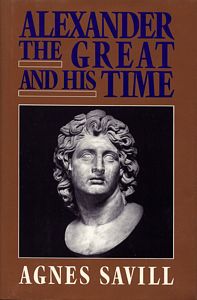 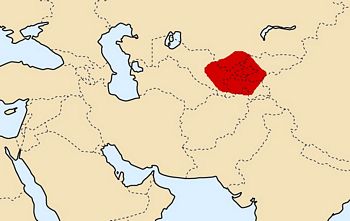 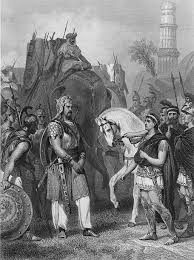 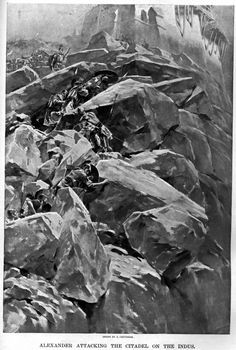 |
Copyright 2008 - 2026 G. Rudolf