
Alexander the Great
| série: | Alexandre le Grand |
| éditeur: | Book Club |
| auteur: | Green Peter |
| classement: | biblio501 |
| année: | 1973 |
| format: | cartonné avec jaquette |
| état: | TBE |
| valeur: | 30 € |
| critère: | *** |
| remarques: | English book 1/ Philipp of Macedon - Macedonia somehow similar to Scotland (Lowlands and Highlands), Philipp belonged to the dynasty of the Argeads - Archelaus was the first powerful king of Macedonia - Philip II reorganized the Macedonian army on the model of the Theban military art of Epaminondas, learning also that the quickest and most effective way of winning a military decision is to defeat the enemy not at his weakest but at his strongest point - the Companions (Hetairoi) consisted of the tribal aristocrats, the Gentlemen of the Bodyguard = Somatophylakes (8 in number) and the Foot Companions (Pezetairoi) - after Perdiccas' defeat against the Illyrian, Philip took over and using Epaminondas' oblique strategy (right wing forward, center and left wing held back), Philip defeated king Bardyles' army of Illyria - Audata, Philip's first wife, was Bardylis' daughter who gave to Philip a girl named Cynane before she died in childbirth, Philip's second wife was Phila, a princess from the house of Elimiotis (died without children), fourth wife was Olympias (Myrtale) of Epirus n.b. marriages of Philip II: - Audata, daughter king Bardyllis, mother of Cynane - Phila of Elimeia, the sister of Derdas and Machatas of Elimiotis - Nicesipolis of Pherae, Thessaly, mother of Thessalonica - Olympias of Epirus, mother of Alexander the Great and Cleopatra - Philinna of Larissa, mother of Arrhidaeus, later called Philip III of Macedon - Meda of Odessos, daughter of the king Cothelas, of Thrace - Cleopatra, daughter of Hippostratus and niece of general Attalus of Macedonia, Philip renamed her Cleopatra Eurydice of Macedon, bringing Philip two children: Europa and Caranus murdered by Olympias at Philip's death - then after military security, Philip looked for financial security with the source of both gold and silver from the Mt. Pangaeus 2/ the garden of Midas - odi e amo = the love-hate relationship between Alexander and his father Philip - Alexander never forgot, seldom forgave - Isocrates' letter "address to Philip" calling for a Panhellenic crusade against Persia - Aritoteles nominated as Alexander's tutor, his racialist view on the barbarians who should be considered as slaves, Alexander received tuition in geometry, astronomy medicine, biology and rhetoric, esp. in the branch of rhetoric known as "eristics" which means arguing a point from either side with equal facility, Alexander soon developed a great taste for eristics which had disastrous consequences later 3/ from a view to a death - by 339 BC, Philip was threatened by the alliance of the Greek with Artaxerxes - battle of Chaeronea, one of the most decisive encounters of all Greek history - a general peace "koiné eirêné" was instituted between all Greek states, creation of the Federal Hellenic League directed by a council (synhedrion), Philip acted as "leader" (hegemon) and in time of war would become commander-in-chief (strategos autokrator) - dispute between Alexander and Philip who believed that Alexander and Olympias were engaged in a treasonable plot to bring about his overthrow - murder of Philip by Pausanias who would certainly not have acted on his own but with the active help from others, it was never proven but it is strongly believed that Olympias was involved and not the Great King of Persia as induced by Alexander later on 4/ the keys of the kingdom - supported of the army, negotiations with Thebes and Athens as well as agreement to Permanio's terms against Attalus - Alexander moved by "pothos" = irresistible urge/longing, murder of Amyntas and espc. of Cleopatra and her children Europa and Caranus - destruction of Thebes = one of the most psychological errors of Alexander 5/ the captain general - Asias's expedition (Athens was willing to supply only 20 triremes and 200 cavalrymen), in fact more Greeks fought for the Great King than were ever conscripted by Alexander - besides the day-to-day record of the expedition by Eumenes of Cardia, head of the chancery, there was an official publicity and propaganda section led by Callisthenes - Green denies the version of the Granicus battle taking place the same day with a frontal assault and follows Diodorus' version that battle was engaged the nex day after crossing the river surprisingly at dawn 6/ the road to Issus - Alexander disbands his fleet and takes therefore a calculated risk - the Ionian coast is liberated, Alexander reaches Tarsus without resistance from the Cilician gates but are taken into a trap by Darius appearing now on Alexander's rear - battle of Issus brilliantly conducted 7/ intimations of immortality - the offer of peace from Darius, two reasons for Alexander not to rush to Babylon: a) strengthen his position (mostly against the Persian fleet) b) give time to Darius in order to set up a new army so that Alexander could now defeat him completely and become lord of Asia - siege of Tyr and desertion from the Persian fleet by Cyprus, Sidon, Rhodes and Lycia elements, despite the fact that Poseidon seems to fight on the Tyrian side and as Carthage could or would send no reinforcement, Tyr was finally overtaken >> p. 138-142 good description of the siege of Tyr - campaign of Egypt where Alexander is instated as pharaoh - battle of Gaugamela, the masterful strategic plan as elaborated by Alexander, the road to Persia was now open 8/ the Lord of Asia - peaceful conquest of Babylon and Susa but sacking Persepolis where Alexander found 120'000 talents worth about £ 44 mio (1913) and being Athens' national income for about 300 years - the fire put on Persepolis due to the fact that the New Year Festival (= ritual renewal of kingship) had not been celebrated by the citizen, also Persepolis would have been a rallying-point for nationalist reesistance, curiously enough the fire of Persepolis preserved it until modern time better than if it had further existed (e.g. with the many hard-baked clay tablets which would otherwise have long since fallen to dust) - afterwards Alexander re-inlisted his troops at Ecbatana forming now a professional army and deposing Parmenio as chief-of-staff 9/ the quest for ocean - in Bactria, Alexander released the Thessalian cavalry, this unexpected demobilisation left Alexander dangerously short of first-class troops and for the first time local auxiliaries were recruited - mention of Asander, Parmenio's brother who is never mentioned again (also from other authors) - murder of Cleitus for daring to express open criticism of the king (Alexander's behaviour: real grief or playacting?) - battle of the Jhelum - Alexander's march to the world's end is stopped but to save the face, the omens were all against him (as climbing down under the pressure from his soldiers would not be thinkable), however Alexander had nevertheless been much humiliated 10/ how many miles to Babylon? - despite the heavy treasures taken with him, Alexander was now again short of cash a the end of the Indian campaign - war against the Hindu warrior caste - Alexander seriously injured which from now on permanently affected his health, the fierce campaigns led against the Brahmin people had a negative influence in the conquered territories during the 20 years that followed Alexander's death, all Macedonian garrisons in the land of the Indus had been wiped out - voyage of exploration by Alexander: meeting with the gymnosophistae = naked philosophers - Alexander's march through Gedrosia (Makran), this march would be a survival of the fittest - purge of the satraps, treachery of Harpalus but Alexander at this time is already much suspected of megalomania by Green - Hephaiston is nominated Grand Vizir and due to become Alexander's successor - Alexander's idea of creating a new ruling class of mixed blood (Macedonian and Persian by organizing the wedding feast of Susa) which would be free of all national allegiance or tradition, proved an utter failure - despite many bribes to his soldiers (paying their debts thanks access to new funds), this did little to improve relations between Alexander and his men - Alexander imbues himself with divinisation (to confirm him as a god) in order perhaps to take the divine shield of invincibiliy to combat his inner fear of failure (he was considered so far as "aniketos" = the invincible) - not very favourable description of Hephaiston by Green "Craterus loves the king, Hephaiston loves Alexander" (Alexander dixit) - it seems that Alexander was not a man for administrative duties and shortly before his death, he was already planning new conquests >> Peter Green at the end of the book gives a rather grim portrait of Alexander describing him as a genius but also as a reckless man of war, otherwise the history of Alexander is well presented in a realistic and charming style with some controversial aspects that would need further clarification, however the main interest of the book consists of the beautiful illustrations and of well executed maps, espc. he map with the Persian satrapies (page 94) the main ones being: Skudra (Thrace), Sparda (Sardis), Yauna (Ionia), Mudraya (Egypt), Arabaya (Arabia), Karka (Caria) Katpatuka (Cappadocia), Armina (Armenia), Arthura (Assyria), Mada (Media), Parthava (Parthia) Asagarta (Sagartia), Parsa (Persis), Bakhtrish (Bactria), Suguda (Sogdia), Hindush (India), Maka (Gedrosia) all in all about 30 satrapies enclosures - cover of the book - a hellenistic Greek onyx cameo of 300 BC representing Alexander and Olympias - supposed head of Alexander found in Alexandria - a Greek hoplite against a Persian cavalryman - a relief at Persepolis portraying a human-headed bull (but rather a human-headed winged lion) and a Persian guard |
| couvertures: | 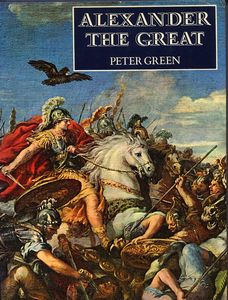 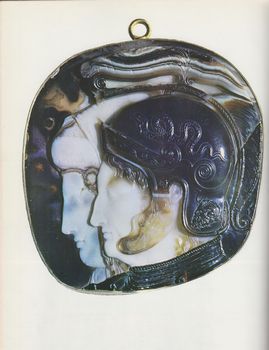 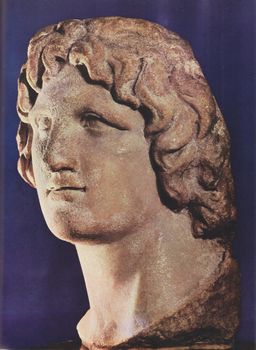 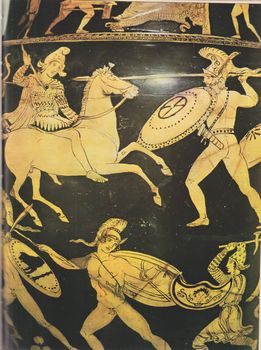 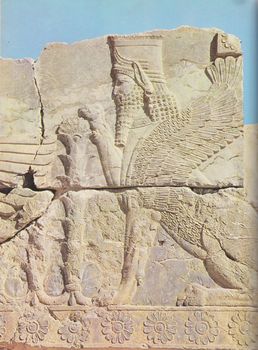 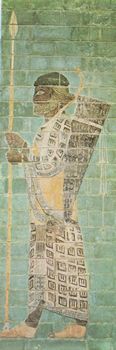 |
Copyright 2008 - 2026 G. Rudolf