
successors of Alexander the Great
| série: | Alexandre le Grand |
| éditeur: | Ares |
| auteur: | Kincaid C.A. |
| classement: | biblio501 |
| année: | 1980 |
| format: | broché |
| état: | TBE |
| valeur: | 10 € |
| critère: | *** |
| remarques: | English book successors (diadochi) of Alexander the Great: Ptolemy I, Pyrrhus of Epirus, Hiero of Syracuse, Antiochus III the Great A) Ptolemy I 1/ regencies of Perdiccas and Antipater (323-319 BC) - Perdiccas, a member of the house of Orestis, succeeded, together with Craterus, as regent at the death of Alexander - Ptolemy received the satrapy of Egypt and soon decided to become an independent ruler, it was said that Ptolemy was also son of Philipp II through his mother Arsinoe who had been a Philipp's mistress - Ptolemy was a man of courtly manners and pleasing address - first conquest of Ptolemy: Cyrene (eastern Libya, 322 BC) - alliance of Antipater, Antigonus, Craterus and Ptolemy against Perdiccas, in the campaign of Egypt, Perdiccas is murdered by his own soldiers, meanwhile however, Eumenes, lieutnant of Perdiccas, had defeated Craterus in Asia Minor and killed him but Eumenès could not exploit his victory - as a result, Antipater became regent as Ptolemy had declined this honour, Seleucus was given the satrapy of Babylon, Antigonus received chief command of the army in Asia and Ptolemy maintained his satrapy - while Antigonus was fighting against Eumenès, Ptolemy annexed Syria and Palestine incl. Tyr and Sidon from Laomedon, lieutnant of Antigonus (320-318 BC) n.b. Antigonus was also called Monophthalmus = Antigonus the One-eyed - death of Antipater (319 BC) 2/ regency of Polyperchon and the anarchy (319-311 BC) - Antipater had given the regency to Polyperchon, not to his son Cassander who was supposed to be too young to impose his authority - alliance of Antigonus, Ptolemy and Cassander against Polyperchon who was unfitted to hold the regency, Ptolemy at this time had two Macedonian wives: Eurydice, daughter of Antipater and Berenice, grand-niece of Antipater + one mistress: Thaïs - war between Antigonus and Seleucus who finds refuge with Ptolemy, Antigonus declares war against Ptolemy, alliance of Ptolemy, Cassander and Lysimachus against Polyperchon and Antigonus - Cyprus is conquered by Ptolemy but Antigonus reconquered Syria by his son Demetrios, battle of Gaza (312 BC) and victory of Ptolemy who reconquers Syria - Seleucos is permitted by Ptolemy to regain Babylon's satrapy, Seleucos creates then the Seleucid kingdom (312 BC) 3/ the five kingdoms (311-306 BC) - anarchy had spread out, war at Cyrene, Cyprus and Greece by Ptolemy >> execution of the last members of Alexander's family: - Arrhidaeus and Eurydice by Olympias - Olympias, Roxanne and Alexander IV by Cassander - Barsine and Herakles by Polyperchon - Cynna, mother of Eurydice and Cleopatra, Alexander's sister by Antigonus - there was only one family member left: Thessalonice, daughter of Philipp's mistress Nicesipolis of Pherae, now married with Cassander - meanwhile Ptolemy had received a son from Berenice: the future Ptolemy Philadelphus - war of Agathocles, tyrant of Syracuse against Carthage (310 BC) - Demetrius, son of Antigonus, conquered Athen (307 BC) and prepared a campaign to Cyprus where he defeated Ptolemy's brother, Menelaus, during this campaign, Demetrius won the nickname of Poliorcetes, the Besieger - further defeat on sea of Ptolemy when coming to the rescue of Menelaus, Cyprus was now completely in the hand of Antigonus and Demetrius - as a result of this victory, Antigonus crowned himself king, followed by Cassander, Lysimachus, Seleucus and Ptolemy, Demetrius receiving also the title of Basileus (a kind of king), there were thus 6 kings and 5 kingdoms out of the empire of Alexander 4/ the campaign in Egypt and Rhodes (306-304 BC) - campaign of Egypt (306) by Antigonus which was repulsed by Ptolemy - war on Rhodes, allied with Ptolemy, Rhodes had developed a strong military fleet "every Rhodian was worth a warship" >> p. 34/35 good description of the Rhodian war - finally Demetrius was out of resource and had to make peace, victory of Rhodes which could defend themselves magnificantly and as a memory, the Colossus of Rhodes (being a great statue of Apollo) was erected - as Ptolemy had supplied very well the Rhodians during the war, he was worshipped by them and called Ptolemy the Saviour 5/ Ipsus, battle of the kings (304-301 BC) - war in Greece by Demetrius against Cassander, victory of Demetrius who rules Greece up to the Thermopilae - alliance of Ptolemy, Cassander, Seleucos and Lysimachus against Antigonus and Demetrius - campaign of Lysimachus into Asia Minor seizing most of the Ionian cities, counterattack by Antigonus but Lysimachus succeeds in eluding Antigonus' forces and waits for Seleucos' army before leaving his base, Seleucos had however to make peace with Chandragupta who, as a counterpart, supplies him with 500 war elephants, then Seleucos entered Cappadocia and joins Lysimachus' forces whereas Ptolemy invades once again Syria - Antigonus and Demetrius defeat Lysimachus and Seleucos, Ptolemy has to retreat again from Syria but the news of the victory of Antigonus was false and the real battle takes place at Ipsus in Phrygia (301 BC) - defeat and death of Antigonus, Demetrius has to flee to Greece and the four other kings were allocated Antigonus' kingdom, but shortly afterwards, Ptolemy and Seleucos were already arguing about Syria 6/ the last years (300-283 BC) - alliance of Seleucos and Demetrius against Ptolemy and Lysimachus - Seleucos married Stratonice, Demetrius' daughter and Lysimachus married Arsinoe, Berenice's daughter, Ptolemy gave also Lysandra, Eurydice's daughter to Agathocles, Lysimachus' son - but shortly afterwards, Demetrius made alliance with Ptolemy and married Ptolemais, another daughter of Eurydice - death of Cassander (298 BC), Pyrrhus of Epirus, brother in law of Demetrius (he married Demetrius' sister Deidameia) was sent by Demetrius to Ptolemy who supplied Pyrrhus with troops and money to recover his kingdom of Epirus - 295 BC Demetrius made himself king of Macedonia but he was then driven out by Pyrrhus who became now king of Epirus and Macedonia, Demetrius now defeated everywhere surrendered to Seleucos and died 283 BC - Ptolemy was now able, after reconquest of Cyprus and Syria, to devote himself to the organisation of his kingdom, Egypt was divided into three provinces: - Delta of Lower Egypt - Central Egypt - Thebaid of Upper Egypt each one governed by a Epistrategos, the provinces divided again into "nomes" - Alexandria became Ptolemy's capital, he founded the Great Museum (university) with a great library based on the temple of the Muses (museion) in Greece - the Great Museum was the meeting point of many teachers such as Theodorus, Hegesias, Stilpo, Diodorus, Philetas, Euclid (whose pupil was the famous Archimedes), Herophilus as well as historians like Hieronymus of Cardia and Manetho, an Egyptian priest - but Alexandria became also a port of trade and the busiest industrial city in the world, Alexandria had even a zoological garden - before his death (283 BC), Ptolemy abdicated for Berenice's son: Ptolemy II Philadelphus and Ptolemy Keraunos together with his mother Eurydice fled to Seleucos who was later on murdered by Keraunos - Ptolemy was perhaps the greatest and wisest successor of Alexander B) Pyrrhus of Epirus 1/ infancy and boyhood - the story of his infancy (being already a romance), son of Aiacides, Pyrrhus took refuge with the Illyrian king, Glaucia who restored him on the throne of Epirus, later, Pyrrhus made alliance with Demetrius who married Deidamia, Pyrrhus' sister but Pyrrhus was overthrown by Neoptolemus, Pyrrhus then joined Demetrius who, after the defeat of Ipsus, sent Pyrrhus to Ptolemy who helped Pyrrhus (aged 22) to reconquer his kingdom of Epirus 2/ Pyrrhus' early manhood - at Cassander's death, Pyrrhus, cousin of Alexander the Great, made his pretention to the Macedonian throne against the three sons of Cassander, after the death of his first wife (Antigone = Ptolemy's daughter), Pyrrhus married three women: - Lanassa, daughter of Agathocles, tyrant of Syracuse - Birkenna, daughter of Bardylis, king of Illyria) - a daughter (name unknown) of the king of Paionia - 289 BC, war against Demetrius who had just conquered Macedonia, Pyrrhus defeated Pantauchas, lieutnant of Demetrius and became famous as a man of war, he became finally king of Macedonia (287 BC) - war against Lysimachus during which Pyrrhus had to abandon Macedonia, but then Seleucos defeated Lysimachus and later on, Seleucos war murdered by Ptolemy Keraunos who became king of Macedonia 3/ the first Italian campaign - 281 BC Tarentum asked Pyrrhus to help the city against the Romans, Lucanians, Samnites and Hellenes were threatened by the Romans (wolves of Italy) who had already defeated the Etruscans - Pyrrhus occupied Tarentum and prepared war against Rome, Pyrrhus makes acquaintance with the military art of the Romans - defeat of the Romans at Heraclea, mostly due to the Thessalian cavalry and by Pyrrhus' elephants, moreover the defeat of the Romans caused revolt from the Samnites, Lucanians, Bruttians and Etruscans, peace negotiations with Rome failed - second battle at Asculum, the phalanx and the elephants mostly contributed to the defeat of the Romans, but this time Pyrrhus did not achieve a complete victory (one more victory like that and I am ruined, Pyrrhus dixit) - at this time, Pyrrhus is asked for help by Syracuse against Carthage who had made alliance with Rome 4/ the Sicilian campaign >> p. 77 origin of the Syracusian war against Carthage, a band of mercenaries, the Mamertines or followers of Mamers or Mars (the Italian god of war) were at random near Messina and Rhegium, the Carthaginians, led by Mago, seized the opportunity to occupy Agrigentum and laid siege to Syracuse whose tyrants: Sosistratus and Thinion asked Pyrrhus for help - meanwhile in Macedonia, Ptolemy Keraunos had been defeated by the Gaul leader Belgius and Macedonia now offered the throne to Pyrrhus but he decided first to go to Sicily wishing to become Lord of Magna Graecia (278 BC) - without great resistance, Pyrrhus got control of Sicily and eliminated the menace of both Carthaginians and Mamertimes, however, Pyrrhus failed to seize Lilybaeum, the last city held by the Carthagenians in Sicily - but now the Sicilians, discontent of Pyrrhus, flamed into open revolt, Pyrrhus left for Italy maintaining his captain Hiero in command of Syracuse 5/ the second Italian campaign - on his return to Italy, Pyrrhus was defeated in a sea battle and lost most of his army and treasure, with his remaining army, Pyrrhus marched into Apulia and Samnium unopposed, but at Beneventum, the Roman consul, Manius Curius drove back Pyrrhus' forces - Pyrrhus asked for help Antigonus Gonatas who meanwhile had driven back the Gauls under Brennus and had become king of Macedonia - since Antigonus Gonatas refused to help him and being short of money, Pyrrhus had to return to Epirus (274 BC) 6/ the Macedonian campaign - Pyrrhus, soon after his arrival, defeated Antigonus Gonatas in Macedonia and became again king of Macedonia and Epirus - Pyrrhus decided to chase Antigonus Gonatas in the Peloponnesus and to defeat him completely 7/ the Peloponnesian war (272 BC) - campaign of Pyrrhus in the Peloponnesus where he wanted first to assume control of Sparta by entrusting Cleonymus, a noble Spartan who had been rejected by the Spartan government on the throne of Sparta as an ally against Antigonus Gonatas - the Spartan resistance was so fierce that Pyrrhus had to retreat but during his retreat, he defeated a Spartan army at the cost of his son Ptolemy 8/ the attempt on Argos and death of Pyrrhus - after his retreat, Pyrrhus set siege of Argos where he found his death, Antigonus Gonatas allowed Pyrrhus' army a honorable retreat and Pyrrhus' sons Alexander and Hellenos succeeded to the throne of Epirus (272 BC) - Pyrrhus is generally considered as a brilliant meteor that lights up for a moment the darkness of the night sky and then disappears without leaving any trace of his passage, but at least he succeeded in preserving the Greek cities in Italy including Sicily to become the subjects of the Carthaginians and thanks to the Greek cities coming under Roman domination, Rome won the command of the sea from Carthage C) Hiero, king of Syracuse 1/ the rise to power - the Sicilian captain Hiero, left by Pyrrhus in Syracuse was given the command of the army by the democratic party and soon became ruler of Syracuse, on Pyrrhus' leave, Hiero was threatened by both the Romans and the Carthaginians - Hiero made alliance with Rome against the Mamertines of Rhegium, after the capture of Rhegium by the Romans, Hiero made campaign against the Mamertines in Sicily and broke their power, Hiero was then elected king of Syracuse 2/ the coming of the Romans - in despair, the Mamertines finally asked help from the Romans against the Carthaginians who using Mamertines' weakness had occupied Messina, by ruse, the Romans deposed the Carthaginians out of Messina and occupied themselves the city -the next step of the Romans were to besiege Syracuse, but Hiero agreed to pay a ransom and peace was arranged with Rome 3/ war with Carthage - the hostilities opened between Carthage and Rome in Sicily >> p. 117 story of the African war elephants raised by Carthage and tamed by Indian mahouts obtained from Ptolemy - soon the Romans had taken advantage in the war, but a relief force was sent from Carthage which was also defeated by the Romans (262 BC), however Carthage was still master on sea and Rome started to build a fleet on their own and even invented a new device: the flying bridge - first victory on sea by Rome at Mylae (260 BC), but the Carthaginians led by a new general named Hamilcar soon took the offensive again, thus Rome decided to reciprocate by sending an army to Africa led by Marcus Regulus, the Roman army in Africa was defeated, however the Romans won another victory on sea at Panormus (251 BC) - finally in 242 BC Gaius Lutatius destroyed the last Carthaginian fleet off Lilybaeum and the Carthaginians were forced to evacuate Sicily - Hiero of Syracuse was now on himself to maintain his independence against the Romans 4/ the peace (241-218 BC) - despite his great help to the Romans, Hiero received no reward, he decided to continue to maintain the good relations with the Romans but started to fortify Syracuse with the help of the scientist Archimedes, Hiero made alliance with Egypt, Athens, Rhodes and Pergamum >> p. 122 description of Archimedes - Carthage worn out by the mutiny of their mercenaries had to cede Corsica and Sardinia to Rome, in order to balance the forces, Hiero contributed in helping Carthage to recover from this civil war which was much resented by Rome - meanwhile Syracuse had become rich and powerful and was able to help the Romans against a Gallic invasion (225 BC) and to support Rhodes when an earthquake hit the island destroying the great Colossus (225 BC) >> p. 126/127 description of Syracuse's ship of state "the Syracusia" whose wood for the construction of the hull was sufficient for the building of sixty ordinary triremes - the wealth of Syracuse came from the impulsion that Hiero gave to the agriculture producing, with its rich soil, vast quantities of corn, oil and wine as well as herds of sheep, goats and cattle, Hiero also encouraged export trade with a stable coinage nd above all he was admired and loved by his subjects 5/ the second Punic war (218 BC) - under the impulsion of Hamilcar Barca and his sons Hasdrubal and Hannibal, Carthage had soon recovered and extended his territory to southern and eastern Spain, at the siege of Saguntum, a city allied to Rome, war broke out again - Hiero maintained his alliance with Rome although Gelon, son of Hiero, would have preferred Carthage (influenced perhaps by his wife, the Epirot princess Nereis) - an invasion force of Carthage failed to re-capture Lilybaeum, the Romans then sailed for Malta which fell into their hands but alarmed by the arriving of Hannibal across the Alps to northern Italy, Titus Sempronius Longus had to leave Sicily which he entrusted to Hiero and the praetor Marcus Emilius - defeats of the Romans at Trebbia (Ticino), lake Thrasymene and Cannae (216 BC), Hiero was by then 90 years of age and his son Gelon after Cannae declared for the Carthaginians, but Hiero insisted again to remain with Rome - Hiero and his son Gelon died 215 BC and the good fortune of Syracuse vanished with the death of her old wise prince 6/ the last days of Syracuse - Hiero's grand son Hieronymus took over and made alliance with Hannibal, before however, Hieronymus had entered war with the Romans, he was murdered - general Adranodorus took over and became once more the ally of Rome, soon afterwards a revolt broke out and Adranodurus together with the whole family of Hiero were executed - two members of the popular party made themselves masters of Syracuse and held it in the Carthaginian interest, the Roman consul Marius Claudius Marcellus prepared then the siege of Syracuse, all his assaults were driven back thanks to the genius of Archimedes - fortune however favoured the Romans: 212 BC a plague broke out and devastated the Carthaginian army, finally the Romans could enter Syracuse and Archimedes was killed during the fighting >> notes: the large mirrors with which Archimedes set fire to the Roman fleet may have existed, but are not mentioned by Polybius, Livy or Plutarch D) Antiochus the Great 1/ his accession (223 BC) - Antiochus III at the age of 18 succeeded his father Seleucus II Kallanikos in 223 BC further to a troubled inheritance, the empire was surrounded by a number of small and medium-sized kingdoms which wanted to remain independent and were ever on the quest of more territories if the occasion would arise, the subsequent wars had also allowed a large settlement of Gauls in Asia Minor and a war between Seleucos II and his brother Antiochus Hierax had added to the disorder of the kingdom, in 223 BC, Seleucos III, brother of Antiochus III was murdered by Attalus, king of Pergamos - during a campaign to Palestine, Antiochus III married Laodice, daughter of Mithridates II of Pontus - the campaign of Palestine was a failure while Molon, the satrap of Media defeated a royal army of Antiochus III, occupying thus both Babylon and Susa, fight between Epigenes and Hermeias, both counsellors of Antiochus III - campaign against Molon who is this time completely defeated, Hermeias is executed by the king and Apollophanes, his doctor, became the new counsellor 2/ the Seleucia and Raphia campaigns and the reduction of Achaeus (219-213 BC) - siege of Seleucia and reduction of Palestine, then Antiochus III made preparations for a campaign to Egypt - battle of Raphia (217 BC) = first battle where two species of elephants (African with Ptolemy and Indian with Antiochus III) were opposed each other, defeat of Antiochus III - on the other hand, Antiochus III turned to Achaeus in Asia Minor and defeated him 3/ Antiochus III's campaigns in High Asia, India, the Persian Gulf, Pergamos and Palestine (213-198 BC) - Lord of Asia Minor, Antiochus III moved against Xerxes of Armenia, he made peace with him and Armenia made no further trouble - Antiochus' next objective was Parthia with his ruler Arsaces III who was defeated, in the following year, Antiochus marched against Bactria whose throne had been usurped by Euthydemus of Magnesia, he was also defeated and Antiochus besieged Zariaspa (Bactria), that became one of the greatest sieges of Antiquity, it lasted two years and ended with a peace treaty - last but not least, Antiochus entered the Indus (206 BC) and subdued Chandragupta's kingdom - his next step was to continue Alexander's unfinished campaign: the Arabian one, Antiochus succeeded in pacifying the Arabian shore (Gerrhae and Tylos, now Bahrein) and returned to Seleucia on the Tigris (204 BC) - Antiochus III then sought revenge for Raphia and prepared again a campaign to Egypt, he conquered Palestine and seized Gaza, at this time, Antiochus was already master of the greatest kingdom that the ancient world had seen since Alexander's death but within its borders were still many independent states, espc. Pergamos, Attalus I, king of Pergamos looked about for an ally and found one in Rome but before Antiochus could subdue Pergamos, he was attacked by an Egyptian army led by Scopas, Antiochus had to turn back from Pergamos and defeated Scopas at Panium or Caesarea Philippi on the Jordan (198 BC) - at this time, the fame of Antiochus reached its highest point, his Greek subjects gave him the title of Megas Basileus and his Asian subjects the title of Nicator, the Conqueror 4/ the Roman menace (198-195 BC) - Antiochus made peace with Ptolemy V and regained Palestine, Caria and Cilicia but after the defeat of Philipp V of Macedonia at Cynoscephalae against the Romans, the Rhodians declared war against Antiochus; peace with Rhodes which got Caunos, Myndos, Samos and Halicarnassus whereas Antiochus got the whole shore of Asia Minor up to the Hellespont except Pergamos - at the death of Attalus I, Antiochus occupied Pergamos, however the cities of Lampsacus and Smyrna appealed to Rome - Antiochus made perhaps the mistake of invading Thrace to teach the Barbarians to respect in future the Greek cities they had plundered, there Antiochus was met by Roman consuls who demanded Antiochus to retreat to Asia, as it was intolerable that the Romans should have had the trouble and danger of defeating Philipp V and that Antiochus should appropriate all the spoils of the war, Antiochus responded that Thrace was his own property gained by his ancestor Seleucos Nicator from Lysimachus - when the Romans supported the claims of Smyrna and Lampsacus, Antiochus broke the negotiations, another nuisance for the Romans was that Antiochus had given refuge to Hannibal 5/ Antiochus the Great and Hellas (195-191 BC) - Hannibal could give good advise how to fight the Romans, but could do no more for the time being, meanwhile Antiochus tried to bind to himself his enemies and doubtful friends by marriage alliances (Antiochus must have had quite a number of daughters as the marriages arranged were of a great number) - negotiations with Rome (192 BC), the peace might have been preserved, but for the folly of the Aetolians who, disappointed at not receiving a greater plunder after Cynoscephalae, came to grip with the praetor of Greece: Titus Flamininus - outburst of the Aetolians who asked Antiochus for help, a tissue of lies by Thoas, Antiochus' agent in Greece, caused Antiochus to believe that he was the only one to rouse Greece to spring from the ground, Antiochus landed in Demetrias on the Thessalian coast (192 BC) but Antiochus' army was too small and the king himself too short of cash - moreover Philipp V of Macedonia allied himself with the Romans, Marcus Acilius Glabrio and Marius Baebius defeated Antiochus who had to leave Greece and return to Ephesus 6/ Magnesia and the death of Antiochus (191-187 BC) - having once defeated the great king, the Romans had lost their fears of Antiochus and were finally resolved to invade Asia Minor - sea defeat at Cissus of Antiochus fleet by Caius Livius (191 BC), the Romans having now command of the sea, landed at Pergamos and waited for further legions led by Lucius Scipio and the great Publius Scipio Africanus meanwhile Antiochus had achieved a victory on sea against the Rhodians, allied to Rome - Antiochus tried to make peace but Eumenes, now king of Pergamos, rejected Antiochus' offer - Antiochus is heavily defeated at Magnesia by Cnaeus Domitius and by Eumenes, he had to retire south of the Taurus and to pay a heavy indemnity - the shock of Magnesia was felt all through Antiochus' empire, Parthia, Bactria as well as Armenia made themselves independent, short of cash to pay his debt to the Romans, Antiochus was killed by the populace when attempting to force a temple in Susa to get the gold treasure kept in - Hannibal died 183 BC by poisoning himself while staying at the court of Prusias, king of Armenia - Antiochus' work consisted mostly in the re-establishment of the Hellenic civilisation but the Romans with their new military tactics and equipment were just too strong - the Seleucids waged no other war against Rome, Eumenes of Pergamos lived to be humiliated and refused admittance to the Eternal city, Antiochus was the last Hellene king to stretch out his hands towards the whole heritage of Alexander >> a very good historical book which can be read as a romance, very good description of the four successors of Alexander and their deeds - a beautiful end to Alexander's history but Kincaid seems not to show great admiration for the Roman civilisation that followed Enclosures - book cover - bust and coinage of Antiochus III - images of Antiochus' time Information Ptolemy was the eldest son of Ptolemy I Soter, pharaoh of Egypt, and of his first wife Eurydice, daughter of the regent Antipater, after Keraunos' younger half-brother, also called Ptolemy, was named heir apparent and, in 282 BC, ascended to the throne as Ptolemy II Phidadelphus, Keraunos had to leave Egypt, being a potential rival for the throne, he arrived at the court of Lysimachus, the king of Thrace and Macedon, and part of Asia Minor, where his half-sister Arsinoe was queen while Ptolemy was staying in Lysimachus's court, Arsinoe's intrigues led to Lysimachus' first son, Agathocles, being accused of treason and then being executed, Keraunos sided with his other sister (from the same mother) Lysandra, who was Agathocles' wife, and accompanied her to the court of Seleucus in the East to solicit his aid, seeing an opportunity to intervene for his own gain in the politics of both Lysimachan Thrace and Ptolemaic Egypt, Seleucus prepared an expedition against Lysimachus shortly afterwards, after Lysimachus' defeat and death in the Battle of Corupedium in 281 BC against Seleucus, Ptolemy Keraunos murdered Seleucus in order to gain control over the territories of his former protector, he then rushed to Lysimachia where he had himself acclaimed king by the Macedonian army at this time he also formally relinquished his claim to the Egyptian throne to secure his position on the throne, Ptolemy asked his half-sister Arsinoe, he widow of Lysimachus, to marry him, later in the year, he made an alliance with Pyrrhus of Epirus, his only rival, Antigonos Gonatas, son of the ex-king of Macedon, Demetrius I Poliorcetes, was confined in the city of Demetrias, Thessaly, and so Keraunos' power extended into Greece as well Arsinoe was not happy with the situation, while Keraunos was away on a campaign, she conspired against him from the capital, Cassandreia, with the aid of her sons, Keraunos quickly captured Cassandreia, and killed Arsinoe's two younger sons while the eldest fled north to the kingdom of the Dardanians, Arsinoe herself fled to Egypt, where she married her own brother, Ptolemy II, and became Arsinoe II although Ptolemy Keraunos was at the zenith of his power, he did not live long afterwards, in 279 BC, he was captured and killed during the wars against the Gauls led by Bolgius who conducted a series of mass raids against Macedon and the rest of Greece, Ptolemy Keraunos' death brought anarchy to the Greek states, since none of his successors were able to bring stability, this situation lasted about two years, until Antigonos Gonatas defeated the Gauls in a battle near Lysimachia, Thrace, in 277 BC after this victory he was recognised as king of Macedon and his power extended eventually to the rest of Greece. |
| couvertures: | 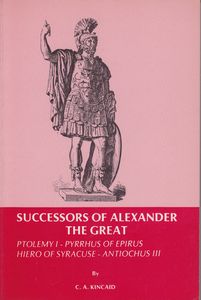 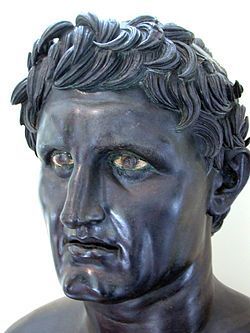 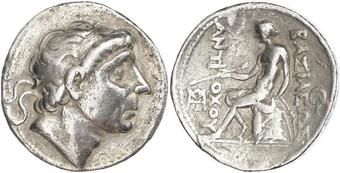 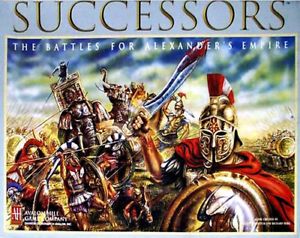 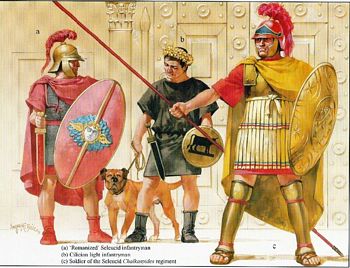 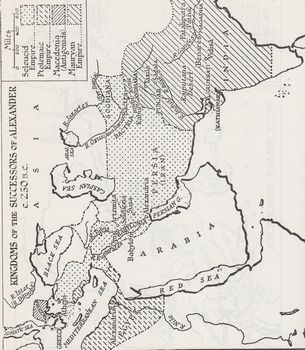 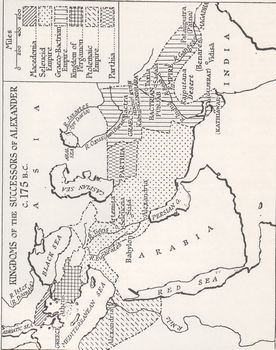 |
Copyright 2008 - 2026 G. Rudolf