
Alexander the Great's art of strategy
| série: | Alexandre le Grand |
| éditeur: | Gotham |
| auteur: | Bose Partha |
| classement: | biblio501 |
| année: | 2003 |
| format: | broché |
| état: | TBE/N |
| valeur: | 10 € |
| critère: | *** |
| remarques: | English book a goal of this book is also to render for readers little snippets of Alexander's voice, great leaders are known as much for what they said as for what they did - Alexander gave inspiration to many modern great generals (Grant, Nelson, Napoleon, possibly also Patton) as well as to many business leaders, also many references in the book to the US civil war and to the Union commanders (page 35) in fact Bose's catchword is to put the tactics and insights of Alexander (called history's greatest conqueror) to work for the reader and start building one's own empire today Alexander much known in India under the name Sikander n.b. India has also produced a great number of films with Alexander the Great - Alexander came at the right moment of Macedonian history summary - to be noted: none of his conquered lands had ever rebelled - all of Greece came together under the authority of Philip II and without Philip's newly organized army, Alexander would probable not have been so great - the role of the companions in the army n.b. there were about 2000 companions in all Macedonia at any given time, serving in eight squadrons of 250 each - for the first time in battle, cavalry became a disruptive technology (e.g. the wedge formation) - light infantry troops were the "shieldbearers" mostly set up for coordinating the transition from cavalry charge to infantry attack >> p 11 the organizaton of the Macedonian phalanx, Philip transformed the phalanx into an indomitable unit, joining force with mobility and flexibility >> p. 12 Philip introduced the notion of a professional army whose soldiers served by choice, not conscription, no other nation had a voluntary standing (permanent) army - in the cavalry horsemen and horses were simultaneously trained for control and endurance, it would take a minimum of five years to train a horse such that it was in harmony with its rider - the training of the infantry was also of first importance e.g. the speed in marching was exceptional (up to 40 miles a day) >> p. 15 the art of diplomacy by king Philip II n.b. Alexander was born July 356 BC when Philip was 27 years old, his parent Perdicccas I coming from Argos founded Macedonia and the Argead dynasty in 650 BC, they traced their lineage directly to Heracles and it seems that the Macedonian king was already treated as a living god (?) >> p. 31 the method of teaching by Aristote, his book "Nichomachean Ethics" >> p. 72 death of Philip when he was 46 years old (336 BC) during the wedding of his daughter Cleopatra without naming officially his successor, however he had already a son or two (abit like Alexander with Barsine and Roxane) - exile of Alexander due to the torpedoing of the mariage with the satrap's daughter but 6 months later, Alexander was back in Macedonia >> p. 75 no other empire had as much trouble with succession as did the Macedonians, Britain's house of Tudor in the 16th century would come close when, after the death of the oft-married Henry VIII, the crown would pass from sibling three consecutive times in just over a decade, ending with the 45-long-rule of Elizabeth I (n.b. and also the succession of the rois maudits in France 14th century) n.b. sibling = gender-neutral term for a brother or a sister, it refers to any two or more individuals who share at least one common parent >> p. 78 the problem of Alexander in the succession of his father, but he had already proved his capacity to rule, and he could rely on his companions now being already commanders in the Macedonian army as well as on the loyalty of Parmenion and Antipater, the chief commanders - on his expedition fo Asia, Alexander took Antipater as regent because he was the only one who was able to resist to Olympias' charm - Alexander had no official successor and his rival generals (called the diadochi) would not last for a very long time, except perhaps for Ptolemy >> p. 164 when invading India, the mentality of Alexander and his soldiers had changed much - during the attack of Mullan, Alexander was gravely wounded and his soldiers were taking a vengeful vindictive empty-hearted wicked mindset, n.b. Alexander's march down the Indus was somehow similar to the march to the sea by general Sherman during us civil war >> p. 172 Egypt had no forest to build a strong navy and the timber had to come from the forests of Lebanon, Tyre was a specialist nation in that connection and Tyre would be for Alexander a beachhead (base for expansion) >> p. 174 the story of the English East India Company and their expansion >> p. 179 the history of fortifications, the siege and capture of fortified Quebec by general Wolfe in 1763 >> p. 182/183 dissertaton about libraries, the first one being in Alexandria >> p. 197 chapter 8 the logistics in Alexander's army >> p. 198 Rommel had also problems in logistics, and at the end of his campaign, he had no longer any supply (n.b. contrary to the author's comments) >> p. 200 an unknown side of Alexander marching into Bactria (carrying only the minimum when climbing the Hindu Kush-passes) n.b. but no great similarity with Napoleon's retreat from Moscow as described by the author >> p. 208 Hindu-Kush traduction = killer of Hindus - the Pashtuns who live in the surrounding valley of the Hindu-Kush are the most warlike people in the world - Alexander got through the Hindu-Kush using the Khawak pass (3600 meters high), 85 km long, it took Alexander's army 16 days to cross it >> p. 210 the tactics of the buzkashi (goat grabbing) >> p. 215 the Nanda empire was an empire ruled by the Nanda Dynasty extending from Bengal in the east, to the Punjab region in the west >> p. 243 the famous speech of Alex at Opis >> p. 253-255 the curious activity of Carnegie's leadingship as the king of steel and railway who ended his life as a philosopher >> n.b. not to be confounded with book of Dale Carnegie: comment se faire des amis end of book: - comments about the successors (diadochi) who ruined the great empire of Alexander - whether a man of goodwill and some times of devilness as described by historians, Alexander will remain however as an immortal individual with glory and courage >> a good book with some interesting complementary comments enclosures - the art of war: the phalanx |
| couvertures: | 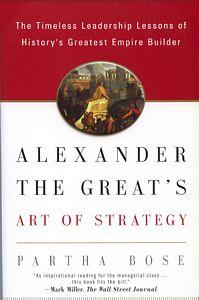 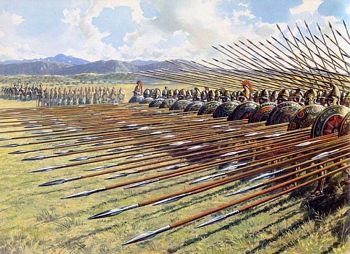 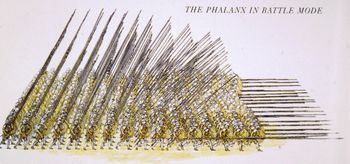 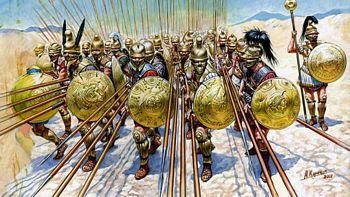 |
Copyright 2008 - 2026 G. Rudolf